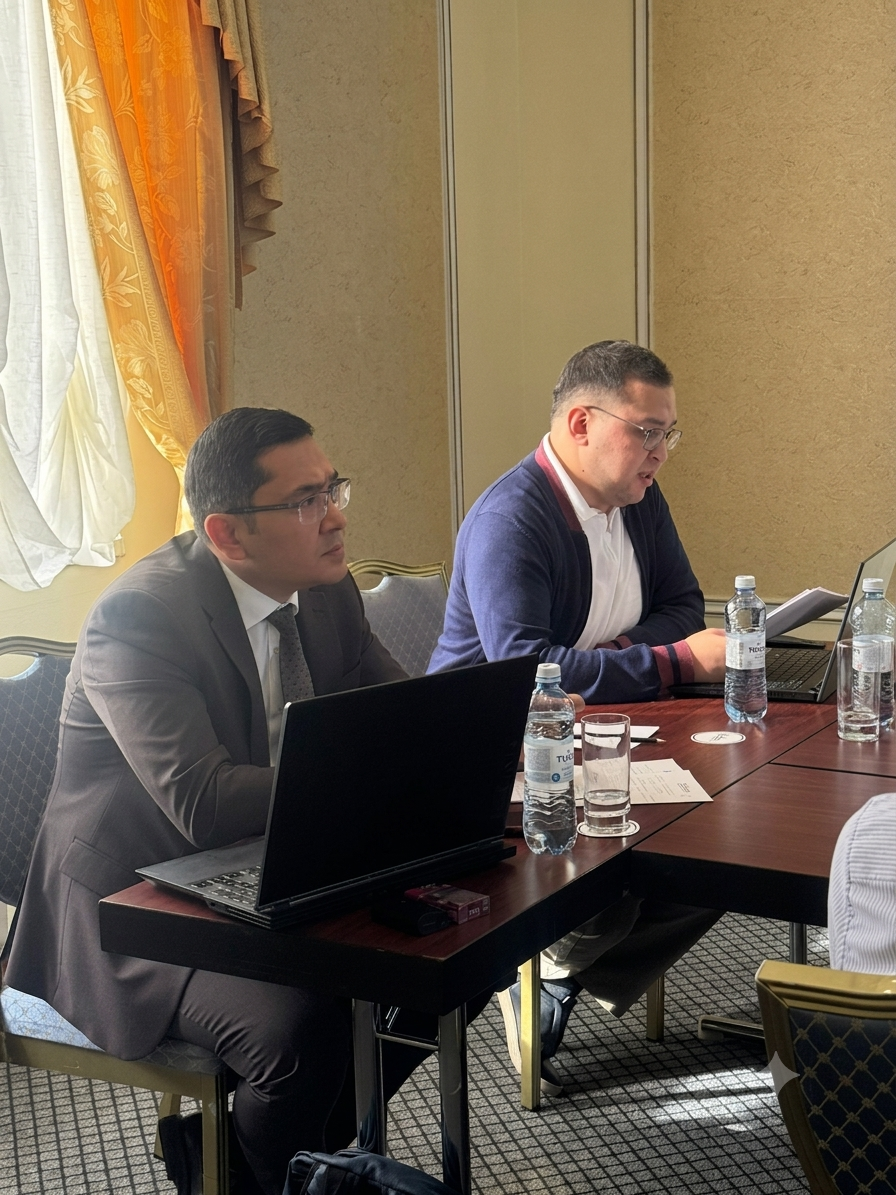
In-Person Practical Seminar for Natural Monopoly Entities and Public Utilities: Key Takeaways and Action Plan
An in-person practical seminar was conducted for Natural Monopoly Entities (NMEs) and public utility organizations. Through practical case studies, six key topics were addressed: preventing temporary compensatory tariffs (TCTs), tariff mechanisms for modernization, energy efficiency, railway siding service tariffs, NME procurement practices, and separate asset accounting.
Below is the summary of key solutions, actionable steps, and control points.
1. Preventing Temporary Compensatory Tariffs (TCT)
- Causes of TCT: Deviations of actual expenditures from the tariff estimate, failure to execute investment programs, quality and procurement discipline violations, and inaccurate reporting.
- Preventive Measures:
- Quarterly reconciliation of actual performance against the tariff model (costs, volumes, quality KPIs).
- Protocols for managerial action across all "red zones" (losses, SAIDI/SAIFI, accounts receivable, capital expenditures).
- Documentary proof demonstrating the targeted use of investment capital.
- Proactive explanations submitted to the regulatory authority when deviation risks arise.
- Internal Control: Quarterly "anti-TCT" audits, a designated list of corrective measures, assignees, and deadlines.
2. Housing and Utility Modernization: Tariff Aspects and Profit Growth
- Core Principles: Return on and return of invested capital, inclusion in the tariff base upon asset commissioning, and alignment with quality KPIs.
- Practical Steps:
- Implementation of a "Tariff-for-Investment" initiative backed by a quarterly commissioning roadmap.
- KPI passports (reliability, system losses, pressure/temperature standards, complaint rates).
- Separate accounting for CAPEX and OPEX across all projects.
- Public hearings featuring clear, transparent presentations on consumer benefits.
- Outcome: Transparent payback periods, reduced operational risks, and manageable profitability tied to service quality.
3. Energy Efficiency: Tariffs, Audits, and Reporting
- "Energy Efficiency $\rightarrow$ Tariff" Link: Verified savings in losses and operational expenses are factored into tariff calculations for subsequent periods.
- Reporting Requirements: Annual reporting supported by photo and meter verifications, a complete project registry, and financial tracking.
- Inspection Readiness: Availability of primary documentation (commissioning acts, meter passports, methodology for calculating savings); internal checklists targeting common errors.
- Quick Wins: Inventory of hidden losses, rapid operational fixes (tuning, automated metering systems [ASKUE], system balancing), and regime controls.
4. Railway Siding Service Tariffs: Solutions and Opportunities
- Calculation Approach: Transparent $Cost / Volume$ ($D / Q$) calculations distinguishing direct and indirect costs; option to apply individual tariffs per siding track.
- Cost Structure: Raw materials, spare parts, labor, depreciation, infrastructure maintenance/repairs, and overheads—backed by clear allocation drivers and norms.
- Justification for Clients & Regulators: Comprehensive service list, clear measurement units (car-kilometers, shunting operations, etc.), downtime/window tracking methodologies, and photo documentation of track conditions.
- Commercial Opportunities: Rate differentiation based on work types and service levels while maintaining transparent cost breakdowns.
5. Procurement Practices for Natural Monopoly Entities
- Core Principles: Transparency, public accessibility, equal opportunity, fair competition, and support for domestic manufacturers.
- Procurement Lifecycle: Planning $\rightarrow$ Selection of procurement method $\rightarrow$ Bidding procedure $\rightarrow$ Contract execution $\rightarrow$ Reporting and archive storage.
- Risk Management:
- Up-to-date lists of procurements and technical specifications.
- Pre-tender market briefings and Q&A publications.
- Evaluation criteria with weighted scoring and quality thresholds.
- Screening against registers of unreliable suppliers.
- Oversight of price and volume contract modifications.
- Internal Policies: Standardized document templates, conflict-of-interest logs, and independent compliance reviews for major procurements.
6. Separate Asset Accounting
- Objective: Eliminate cross-subsidization between regulated and non-regulated services.
- Classification: Categorization of direct, indirect, shared, and general business costs/assets, each governed by an approved allocation driver.
- Methodological Framework: Alignment with IFRS, standardized reporting forms for revenues/expenses/assets, and verification of the causal link: $\text{Asset} \rightarrow \text{Service} \rightarrow \text{Tariff}$.
- Control Mechanisms: Annual submission of forms, internal audits of cost allocations, and cross-verification of accounting data against operational metrics.
Executive Action Checklist (To Be Completed by Year-End)
- Execute an "Anti-TCT" Audit: Review actual performance vs. tariff estimates and investment programs, service quality, procurement compliance, and reporting accuracy.
- Update Procurement Regulations: Revise quality criteria, market communication procedures, unreliable supplier filters, and contract change management.
- Establish Separate Accounting: Approve allocation drivers, standardize accounting forms, and assign responsible managers for each service line.
- Align Energy Initiatives: Consolidate energy efficiency projects with financial tracking to prepare a verified evidence base for regulatory audits.
- Update Railway Siding Calculations: Recalculate $D$ and $Q$ values, update service catalogs and measurement units, and complete photo-inspections of track infrastructure.
- Revise the Modernization Roadmap: Finalize asset commissioning schedules, update KPI passports, and prepare presentation materials for public hearings.
Contact Information
For consultations, tariff application preparation, setup of separate accounting systems, or procurement support, contact the PriceExpertise team via the website feedback form or by email at: priceexpertise1@gmail.com.
